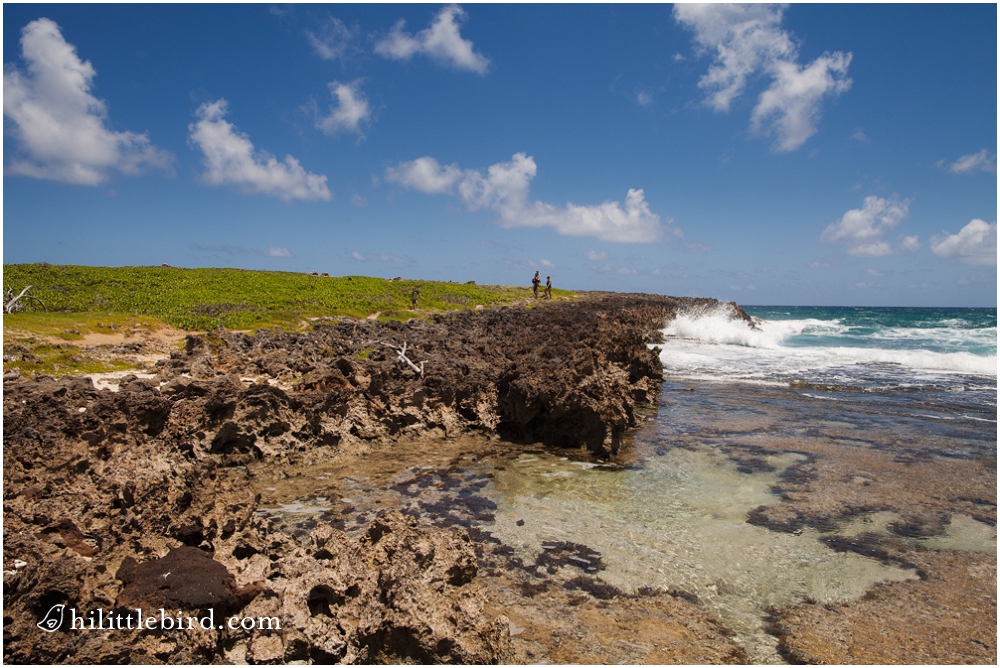
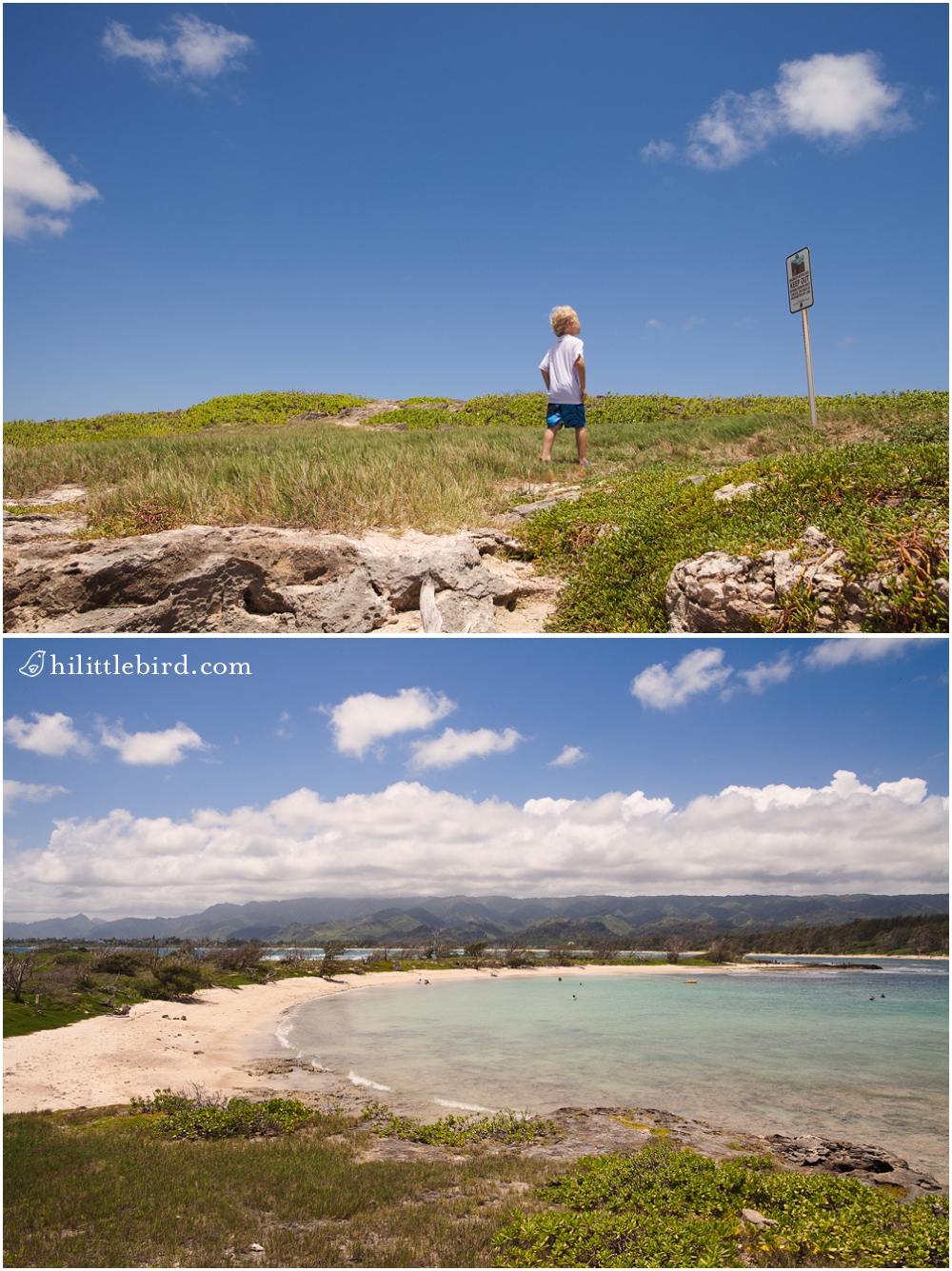
Goat Island (officially Mokuauia Island) sits just offshore from Malaekahana State Park in Laie, about an hour from Waikiki. At low tide on a calm day you can walk, swim, or paddle across. On the other side you get a small crescent beach, a seabird sanctuary full of wedge-tailed shearwater burrows, dramatic lava rock on the east end, and the distinct feeling of being somewhere most people never bother to go. Dogs are not allowed and for good reason. A single dog can wipe out dozens of nesting birds. Everything else is welcome.
A Sanctuary for Seabirds (and People)
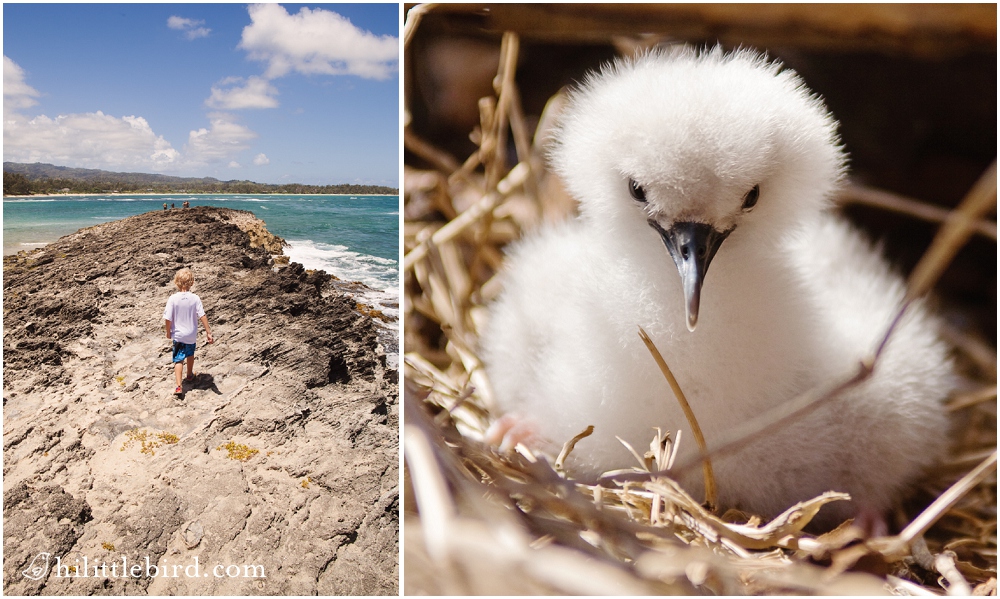
August is my favorite time of year to visit Goat Island (Mokuauia Island) in Laie. That’s when you can find newly hatched Wedge-tailed shearwater chicks. Shearwaters are a type of seabird that nest in burrows underground and their chicks look like little gray puff balls (as in super cute).
Years ago, I worked for Bishop Museum on a conservation project to document and protect Hawaii’s offshore islets – some of the last remnants of Hawaii’s coastal ecosystems. The dramatic rocks and sea stacks scattered you see around the main islands act as a sanctuary for seabirds (and other natives). Their relative isolation makes them a safe place for seabirds to make their burrows away from predators like cats, dogs, mongoose, and rats. I was excited to take the kids on an adventure and share this special place.
The Best Time to Visit
Evenings and early mornings are the best times to visit if you want to see seabirds. During the day, the adults are feeding or doing shift changes (both parents forage and feed the chick) and the chicks hide deep in their burrows. When it’s cooler, bored chicks will sit at the entrance to their burrows so you may catch a glimpse. And in the evening, adults return to the island in mass where they form “clubs” to chat with friends.
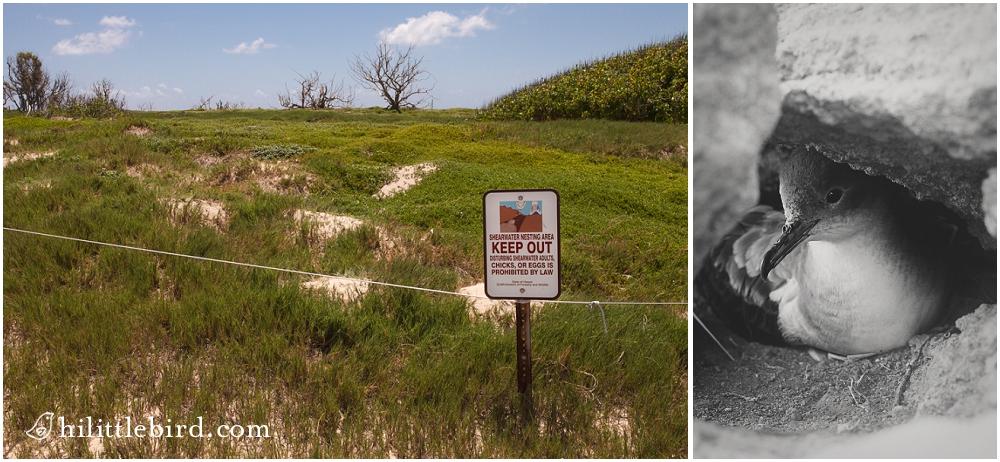
We attempted an early morning visit, but with two families and the expected chaos of 5 young kids it didn’t quite go as planned. By the time we made it to the island, the sun was blazing overhead and most baby chicks were tucked deep in their burrows. We did get lucky with a few lounging adults and chicks sitting in shallow burrows though.
Not interested in Seabirds?
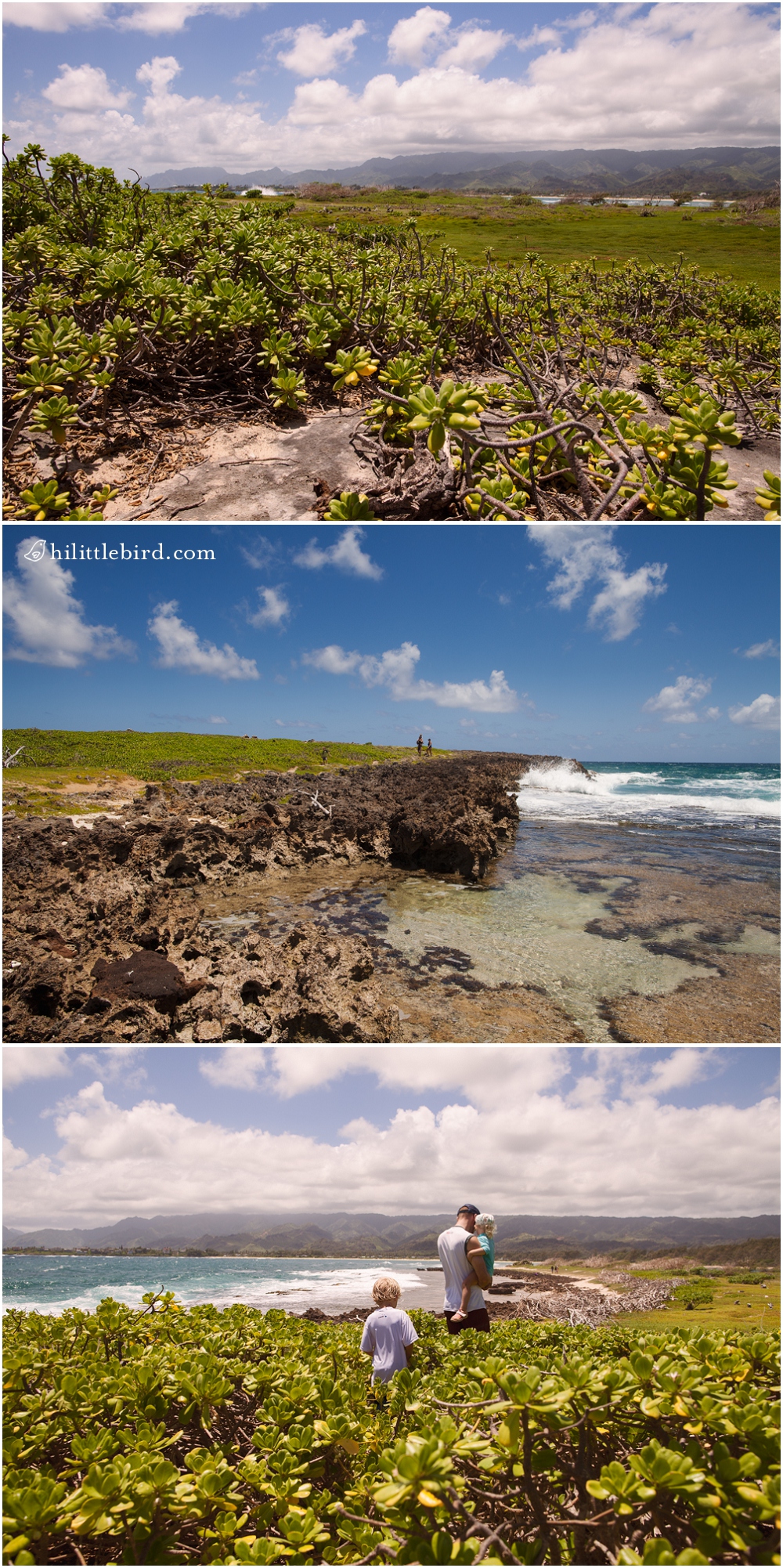
If you’re not a big bird fan, it’s still a lovely spot to visit. You can search for crabs and shells, or splash in the protected water of the lagoon on your own private island. Before you leave, make the trip around the perimeter of the island or at least check out the east end where jagged rocks meet the pounding surf and breathe in the dramatic beauty. To protect the fragile burrow system in the island’s interior, stay on the beach or the perimeter trail, and leave dogs at home.
Getting to Goat Island
Where to find it
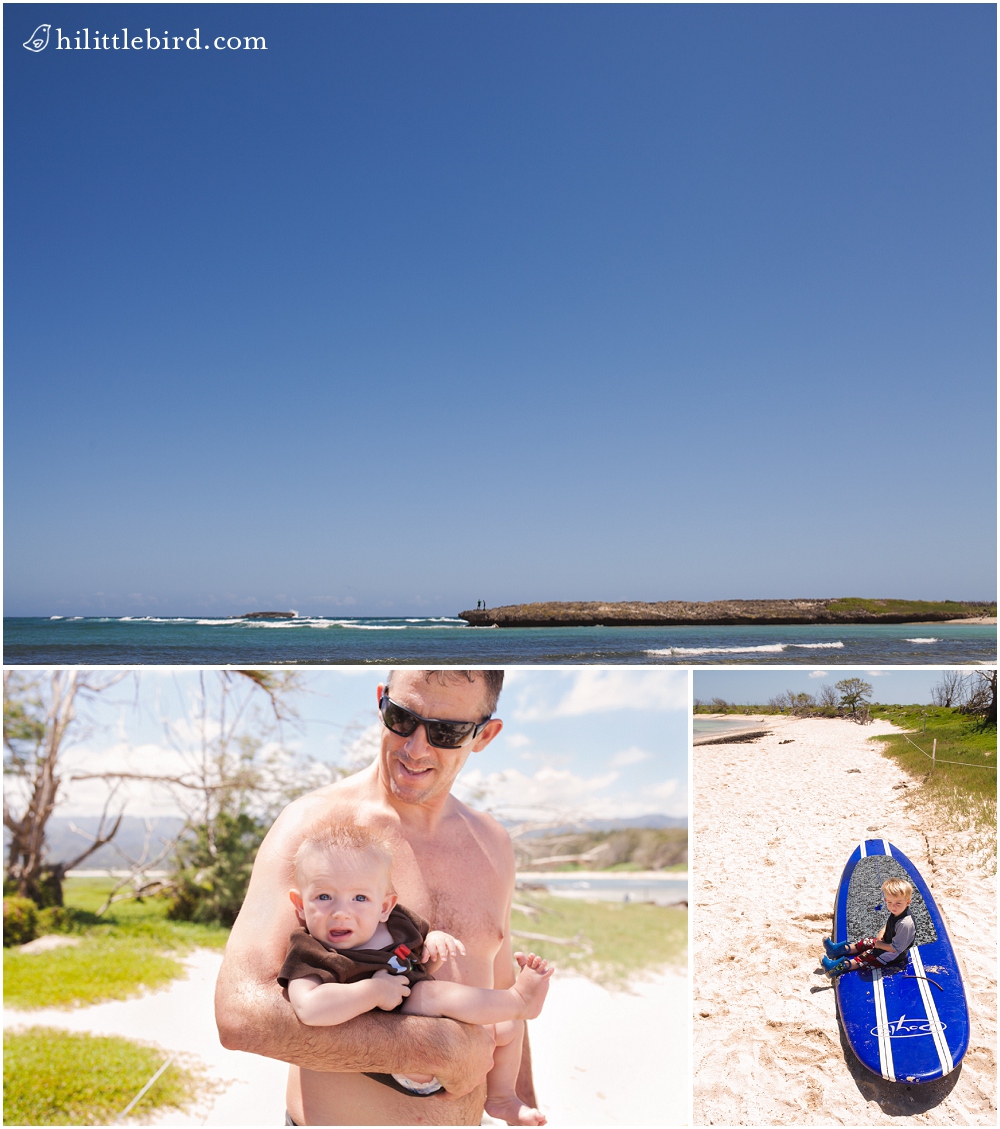
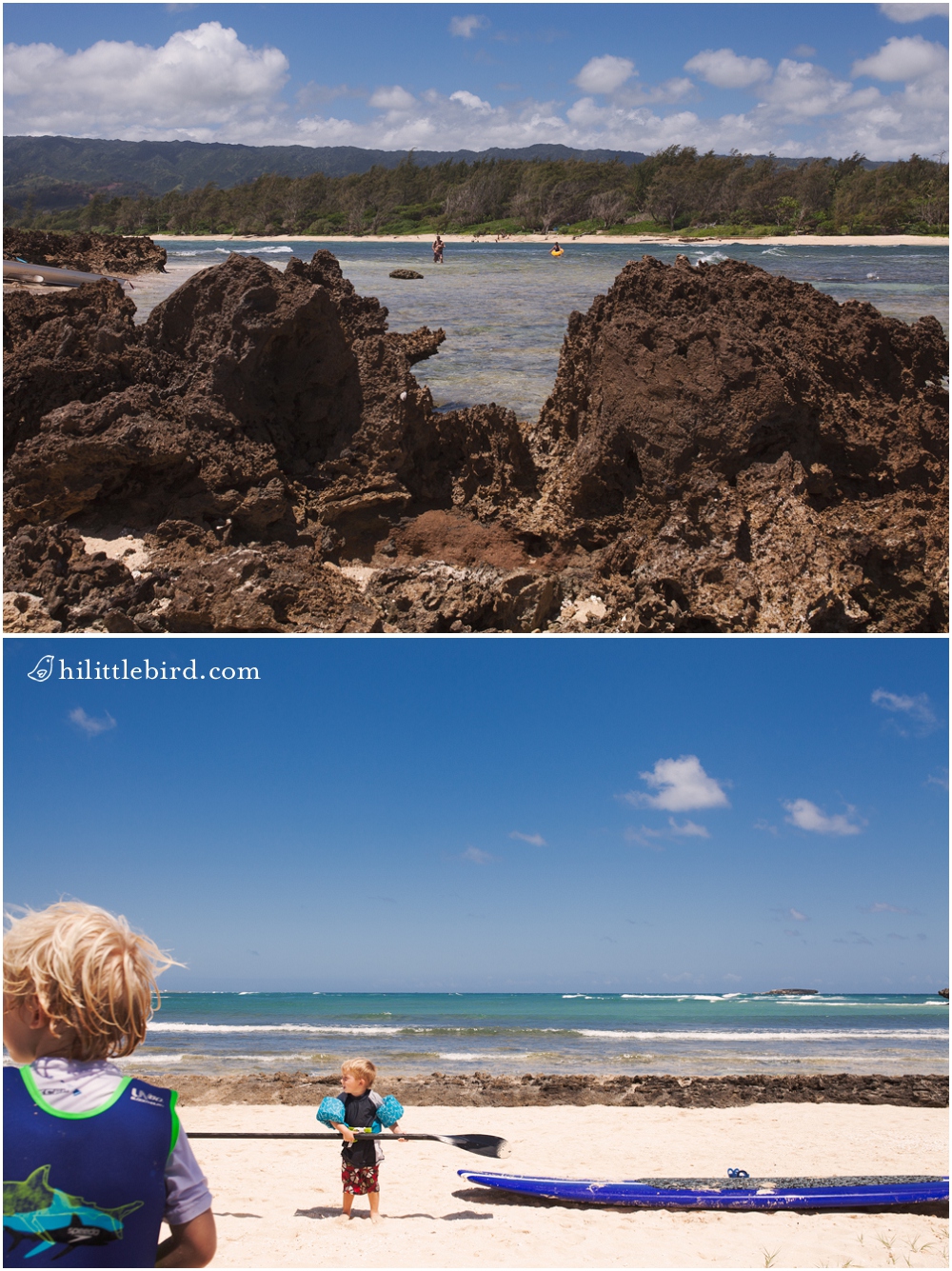
Goat Island is located in Laie on the northeast corner of Oahu about an hour’s drive from Waikiki. To get to the island, park at Malaekahana State Park. Head to the left of the bathrooms and out to the point directly across from the island. From there you can paddle, swim, or walk out. The crossing is easiest at low or mid-tide when the surf is mellow. At other times, you can stumble into holes in the reef and big waves can knock you over.
How to get there
The best method to get to Goat Island depends on weather conditions, what gear you have, and what you’re comfortable with.
- Paddle. If you have a kayak, stand-up paddle board, or really anything that floats, you can launch from the beach and look for a sandy landing area near the western tip of the island or you can land on the sandy crescent-shaped beach on the islands north shore.
- Swim. If you’re a confident ocean swimmer with no gear, you can swim the channel. It’s short but can be choppy. Go at mid tide when conditions are calmest and you have more clearance from the coral.
- Walk. At low tide, you can walk to the island. The crossing is over reef so protect your feet and reduce damage to the reef by wearing reef tabis. These felt bottomed booties can be found at local fishing stores and sometimes Walmart or Longs.
Weather considerations
It is normally windy in this area so expect wind and choppy waves. In the winter months there can be wrap around from big winter swells making the crossing too dangerous. Check weather conditions before heading out.
Tide also plays a role in your crossing. The water depth varies depending on the tide and the exact path you take but at low tide, an adult can wade to the island. If it’s low tide, and the water is rough, it can make walking more challenging as waves can knock you over. For swimmers, low tide can make it too shallow to swim in some areas.
Personally, I’ve made this crossing (for work) many times. Without kids, I prefer to wear a light waterpoof backpack (if needed) and tabis and swim most of the way, walking if it gets too shallow. With kids or more gear, it’s easier to kayak. Landing can be difficult with wind/rocks/waves so I still like tabis so I can jump out early and walk the last bit to a safe landing spot.
What to pack for your island adventure
Most people like to spend a few hours exploring or lounging on the island after making the effort to get there. Here’s what I recommend bringing for your Goat Island adventure –
Getting there. If you’re paddling, bring a kayak, SUP, or bodyboard. If you’re walking or swimming, you just need yourself and a dry bag for anything you want to keep dry.
On the island. Water, reef-safe sunscreen, a hat, and snacks. There’s nothing on the island so bring everything you need for a few hours. A camera is worth it — the east end is dramatic.
For your feet. Reef tabis are the right call for the crossing and for walking around the island. The reef is uneven and sharp in places and tabis protect both you and the reef. If you can’t find tabis, at minimum bring slippers for the island itself.
For your valuables. A dry bag is worth having regardless of how you cross. Even a calm crossing can get splashy.
What not to pack when visiting Oahu’s offshore islets
These islands are part of the Hawaii state seabird sanctuary. They protect nesting seabirds along with other native flora and fauna, so please be a good steward when visiting.
Dogs. Leave them home. A single dog on an offshore islet can kill dozens of nesting birds in a short period. These islands are a seabird sanctuary and dogs are not permitted.
Hitchhikers. Check your gear for sticky seeds or ants before you go. The relative isolation of Hawaii’s offshore islets is what keeps native flora and fauna safe from introduced pests. Don’t be the person who breaks that.
More to Explore in the Area
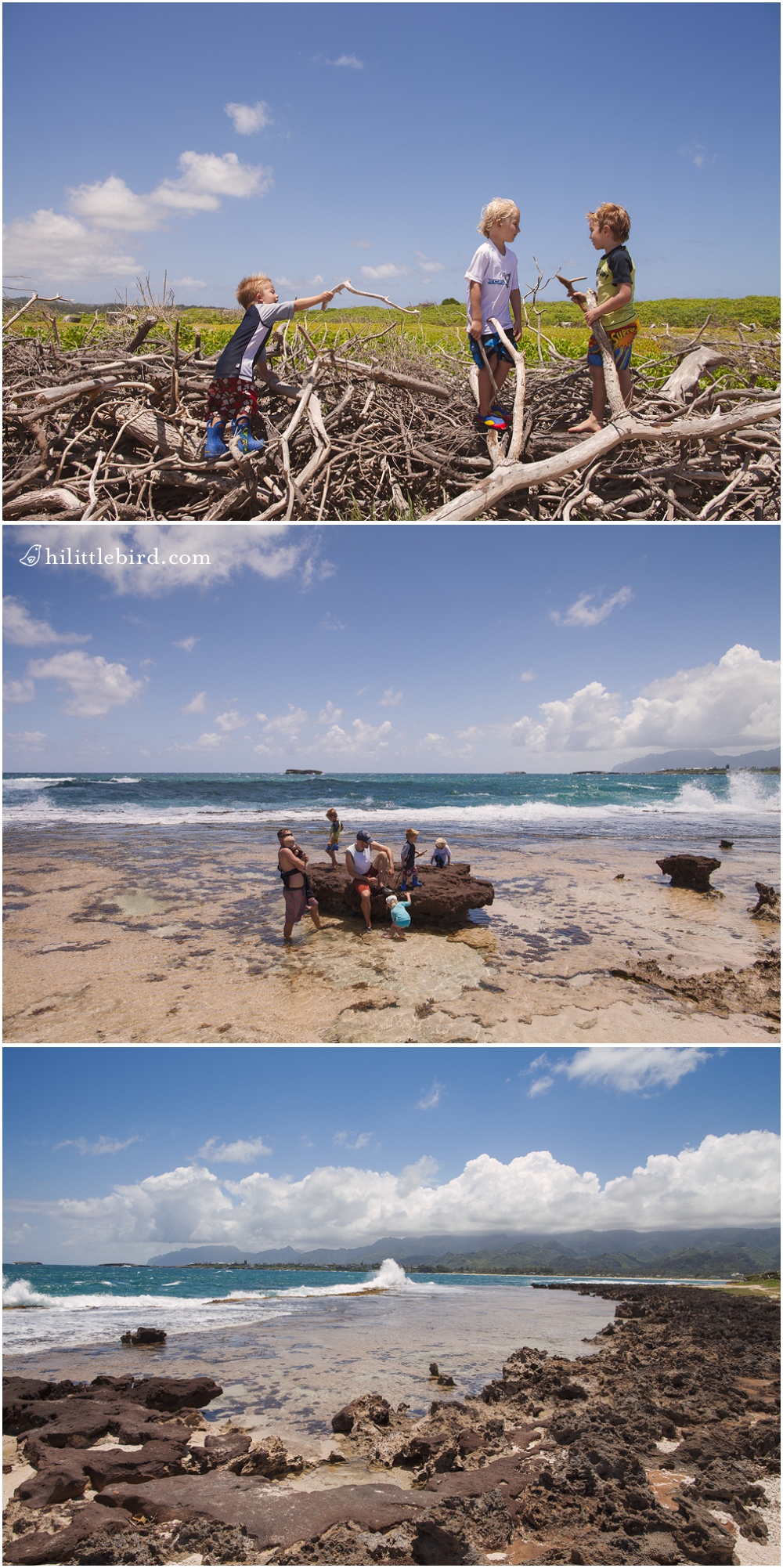
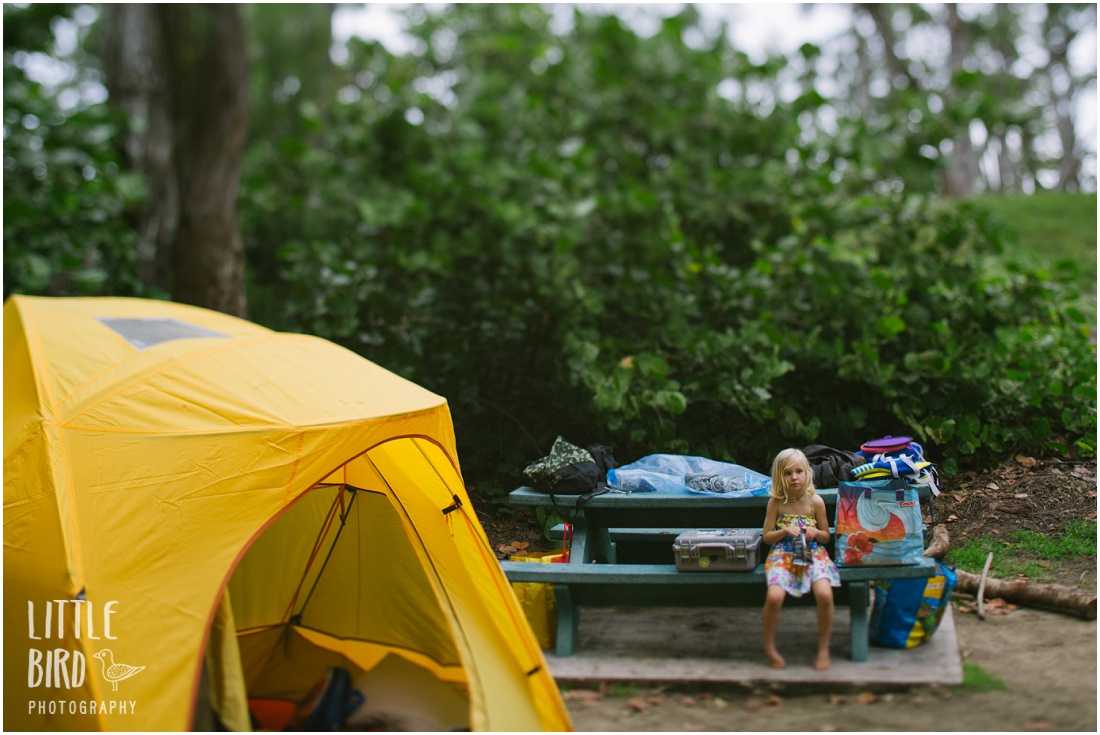
If you’re not up for a water crossing, there are more low-key areas to explore in the area. Malaekahana itself is fun for camping or picnicking or you can head down the coast to beautiful Kahana Bay. If it’s low tide, you may want to hunt for Baby Beach in Laie or explore the tidepools at Kokololio Beach Park.
Family Photos Near Goat Island
This wild corner of the island from Laie, Malaekahana, the stretch of windward coast heading north, doesn’t get as much attention as Kailua for photo sessions, which means when you do shoot here the beach is usually quiet (and some of my personal favorite scenery on Oahu). If you want to see what a morning adventure on this side of the island looks like, you can find sessions here, here and here. And if it looks like something your family would be into, here’s where to start.
Goat Island FAQs
Q: Can you walk to Goat Island from the beach?
A: Yes, at low tide. The crossing from Malaekahana State Park is short but goes over reef, so protect your feet with reef tabis or sturdy slippers. At higher tides or in rougher conditions, swimming or paddling is safer.
Q: Are dogs allowed on Goat Island?
A: No. Goat Island is a state seabird sanctuary. Dogs are not permitted — a single dog has been known to kill over 90 nesting birds in a short period. Leave them at home.
Q: What is the best time of year to visit Goat Island?
A: August is the best month if you want to see wedge-tailed shearwater chicks in their burrows. For the crossing itself, summer months are generally calmer. Winter can bring wrap-around swell from the north shore that makes the crossing dangerous.
Q: What is there to do on Goat Island?
A: The north shore has a small crescent beach good for swimming and relaxing. The interior has shearwater burrow fields worth walking quietly through. The east end has dramatic lava rock where the surf pounds the shore. Walk the full perimeter if you can — it takes about 20 minutes and the contrast between the calm lagoon side and the east end is striking. Stay on the beach and perimeter trail to protect the burrow system in the interior.
Q: How long does a visit to Goat Island take?
A: Most families spend two to three hours including the crossing, exploring the island, and the return trip. Budget more time if you have young kids or want to sit and watch for seabirds.




Off The Beaten Path
Get my top ten list of spots in Oahu complete with photos + directions, so you know exactly what to expect. You’ll also receive ongoing adventures, beautiful images and happy updates. Escape to the islands once a month and learn exactly how to enjoy Hawaii like someone who raises their family here!
Get on the list