
Koko Crater Botanical Garden is a free, 2-mile loop trail inside a volcanic crater on the southeastern end of Oahu, about 25 minutes from Waikiki. It’s one of five botanical gardens managed by the City and County of Honolulu, open daily from 9am to 4pm. The dry, bowl-shaped microclimate makes it unlike anywhere else on the island: think cactus gardens, baobab trees, a plumeria grove with dozens of varieties, and native Hawaiian plants at the back. Never crowded, always free, and one of the only places on Oahu where kids can roam free.
What You’ll Find Inside the Crater
The trail is a loop with a few crossover points, so you can cut it short if needed. The full loop takes about an hour to 90 minutes with kids, depending on how long they spend investigating things. And they will investigate things. The garden is organized loosely by region, and every section has something worth stopping for.
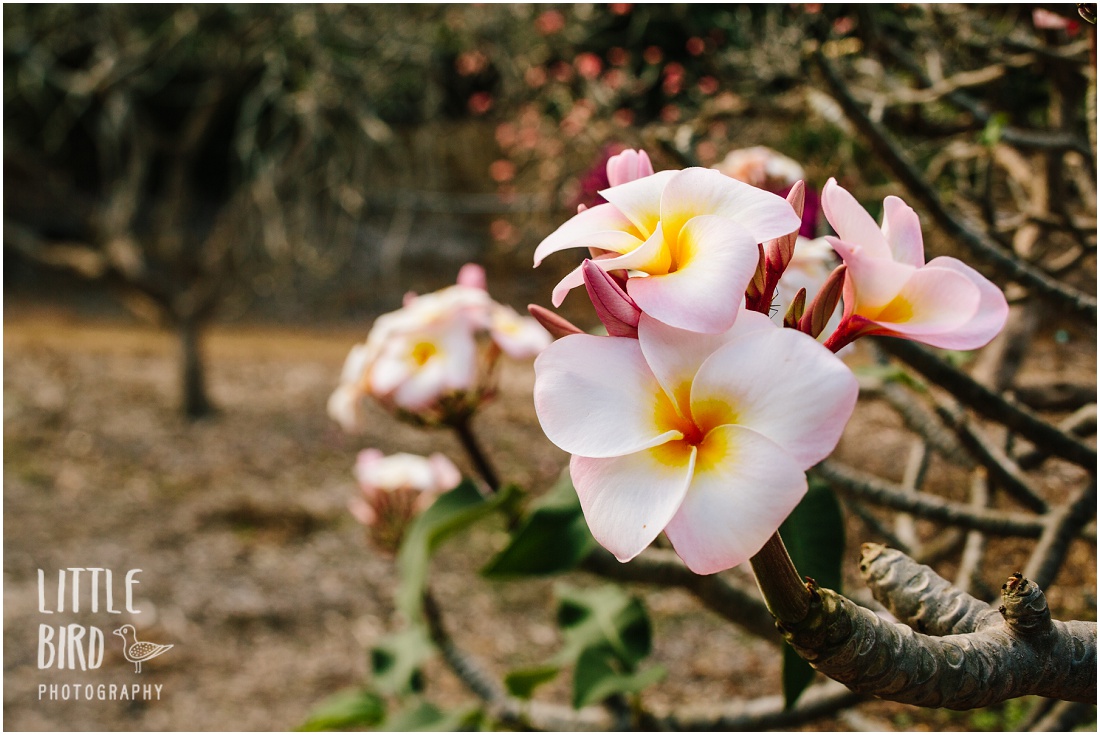
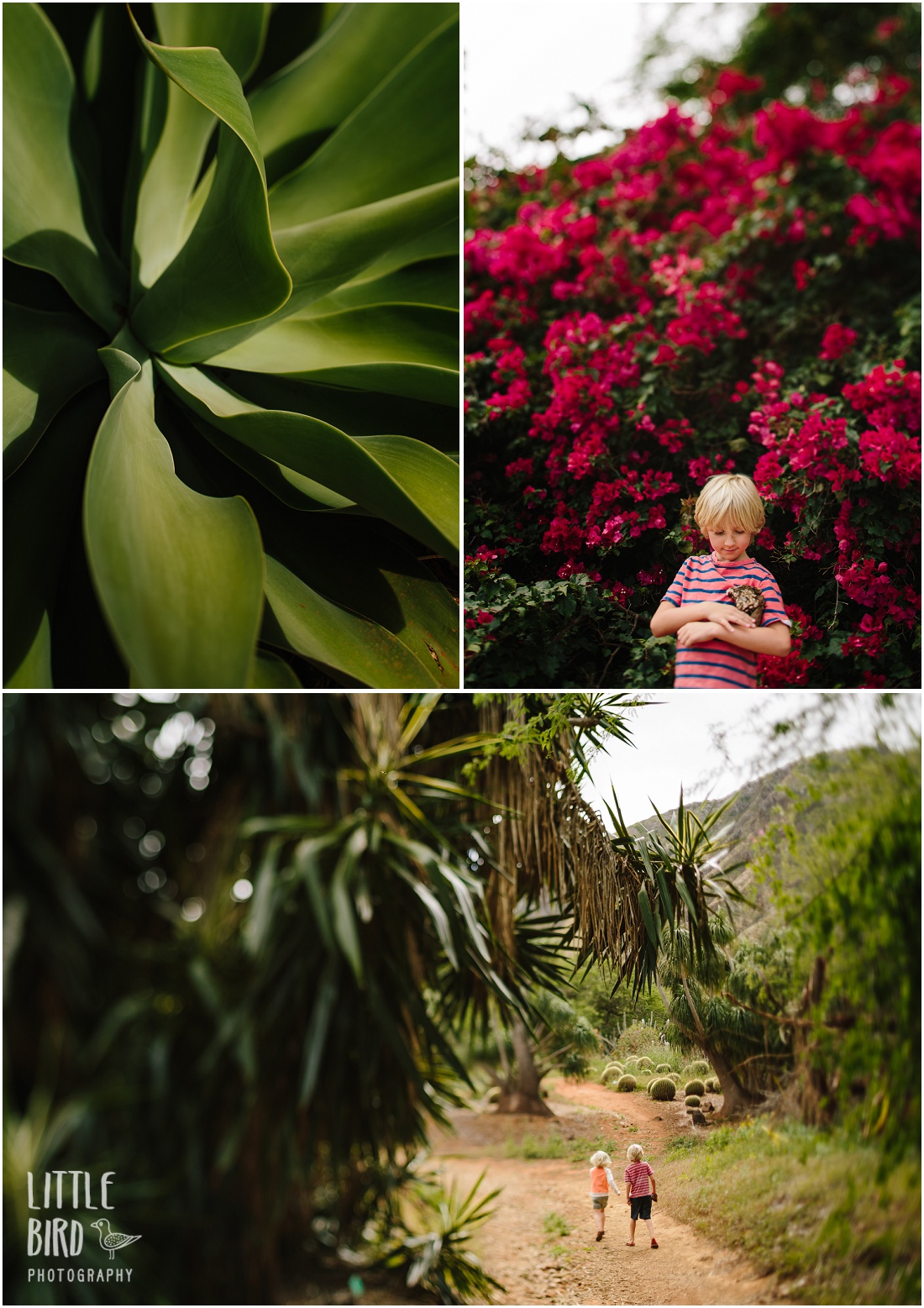
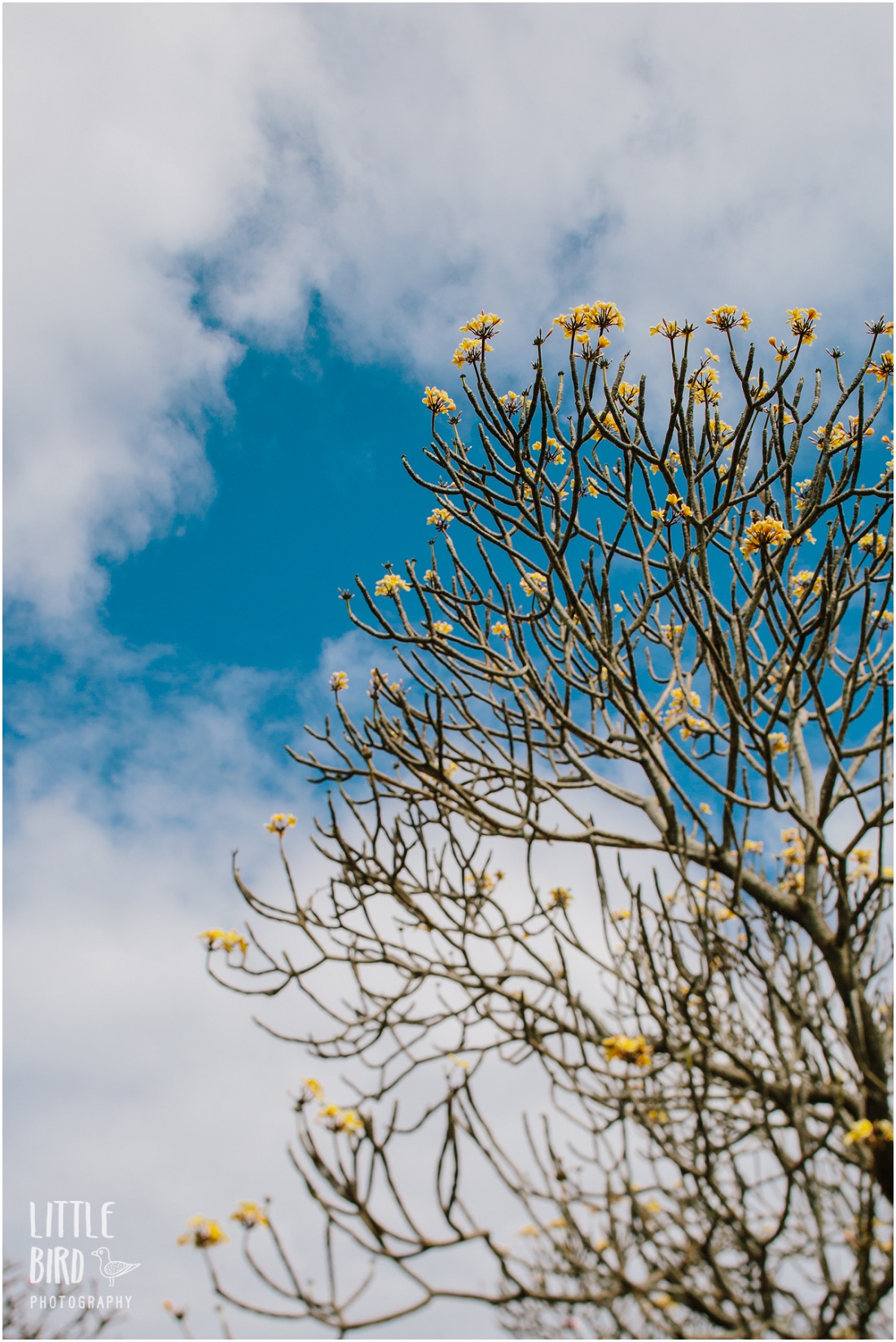
The plumeria grove greets you right at the entrance. These are mature trees, and in bloom (late spring through summer), they come in colors you won’t find on the average lei: deep magenta, pale peach, bright orange. Even out of bloom they’re worth a look.
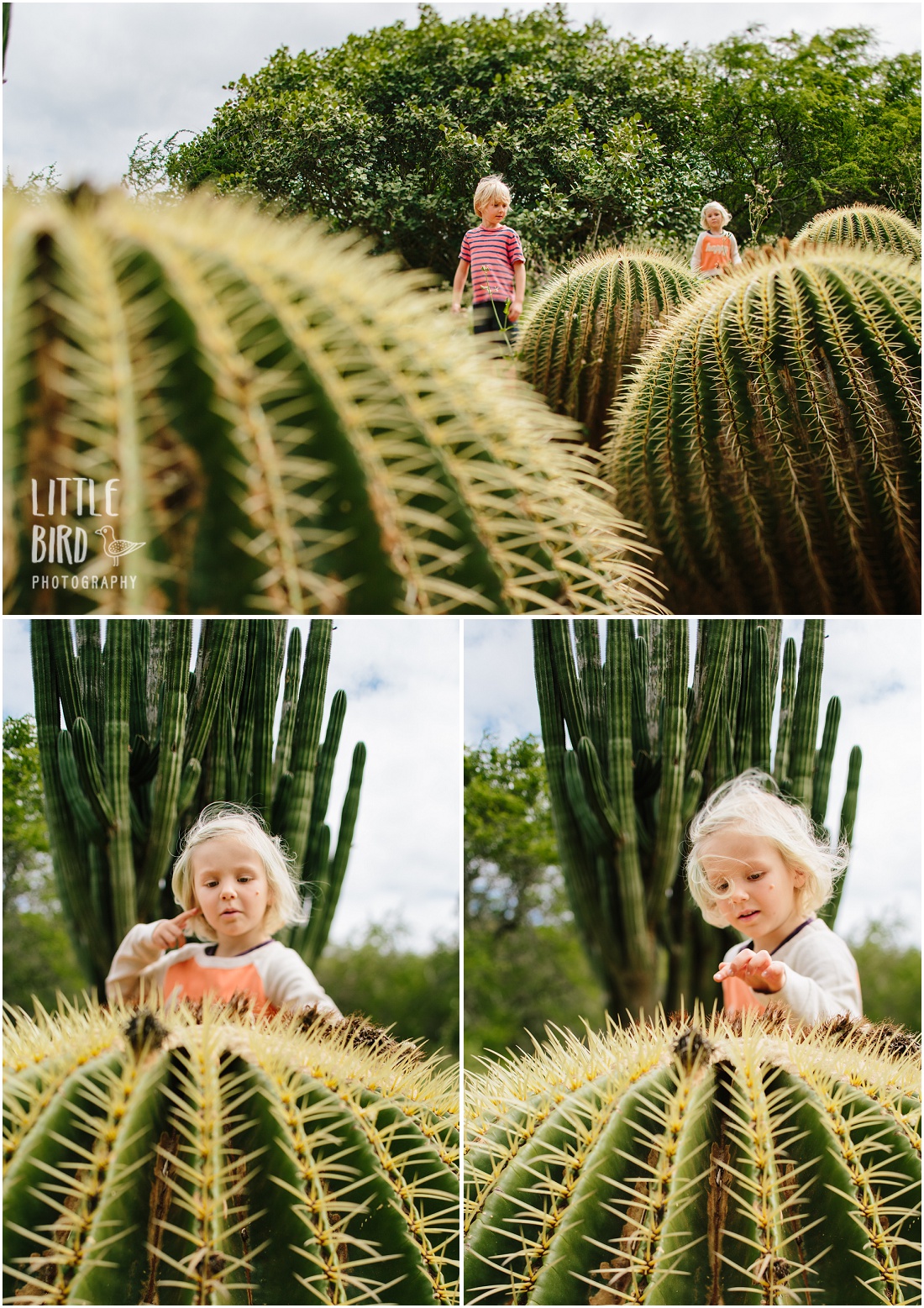
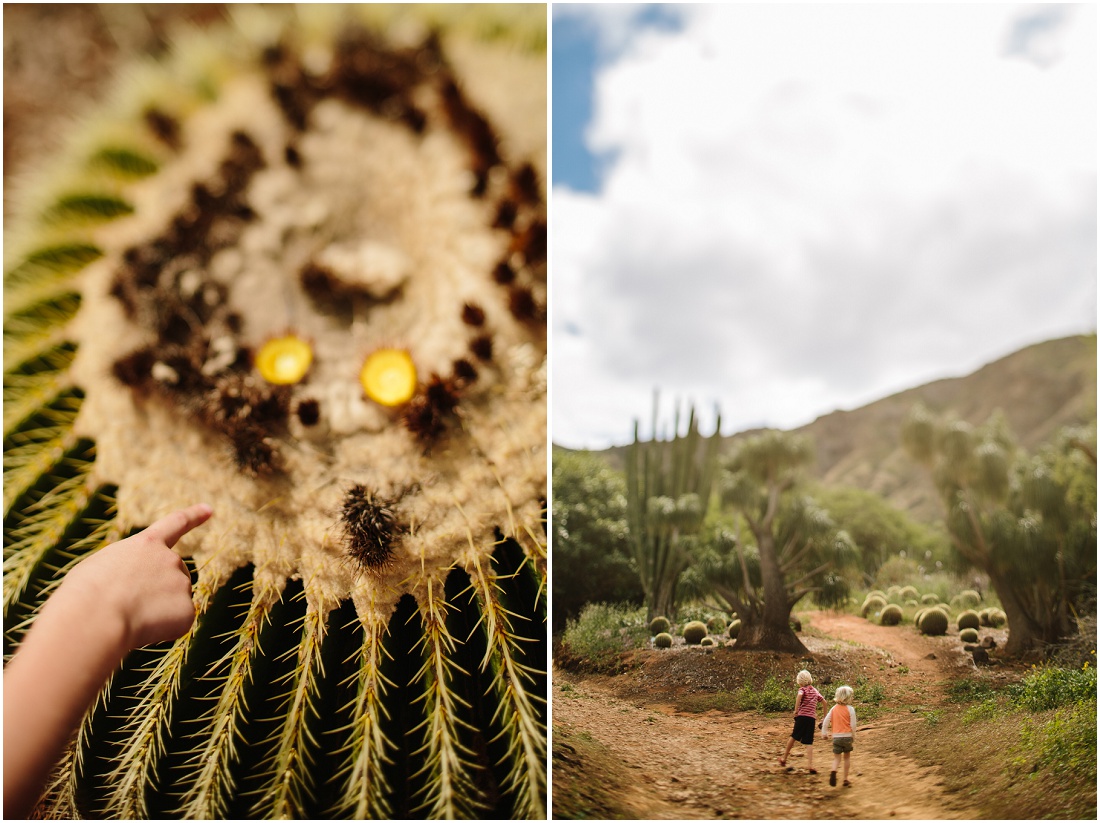
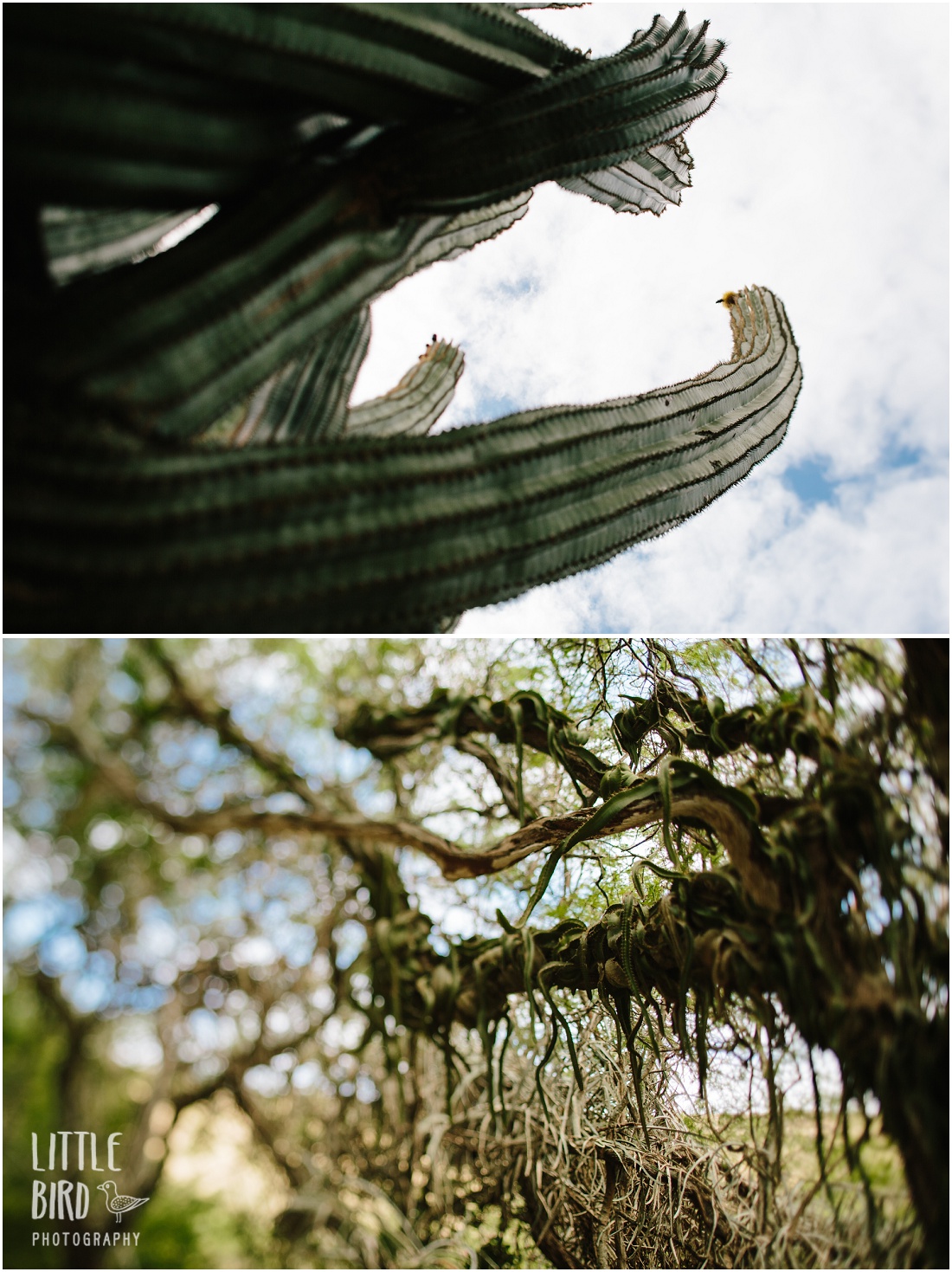
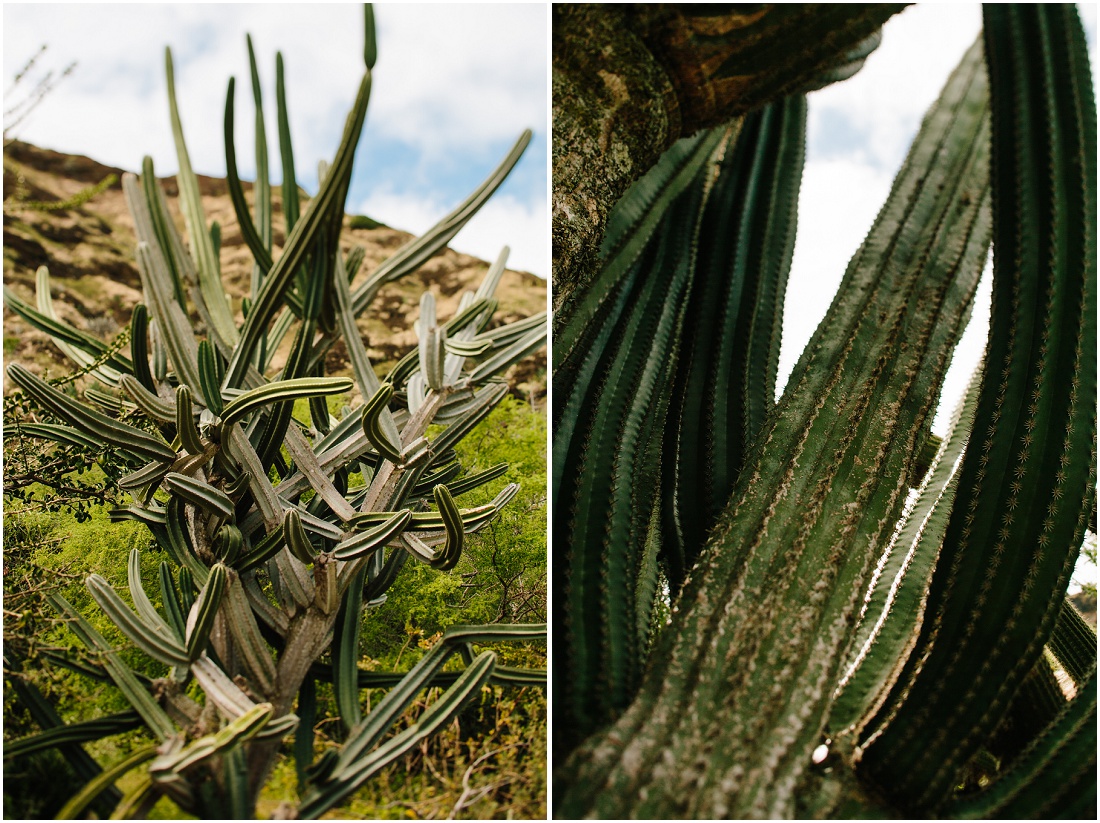
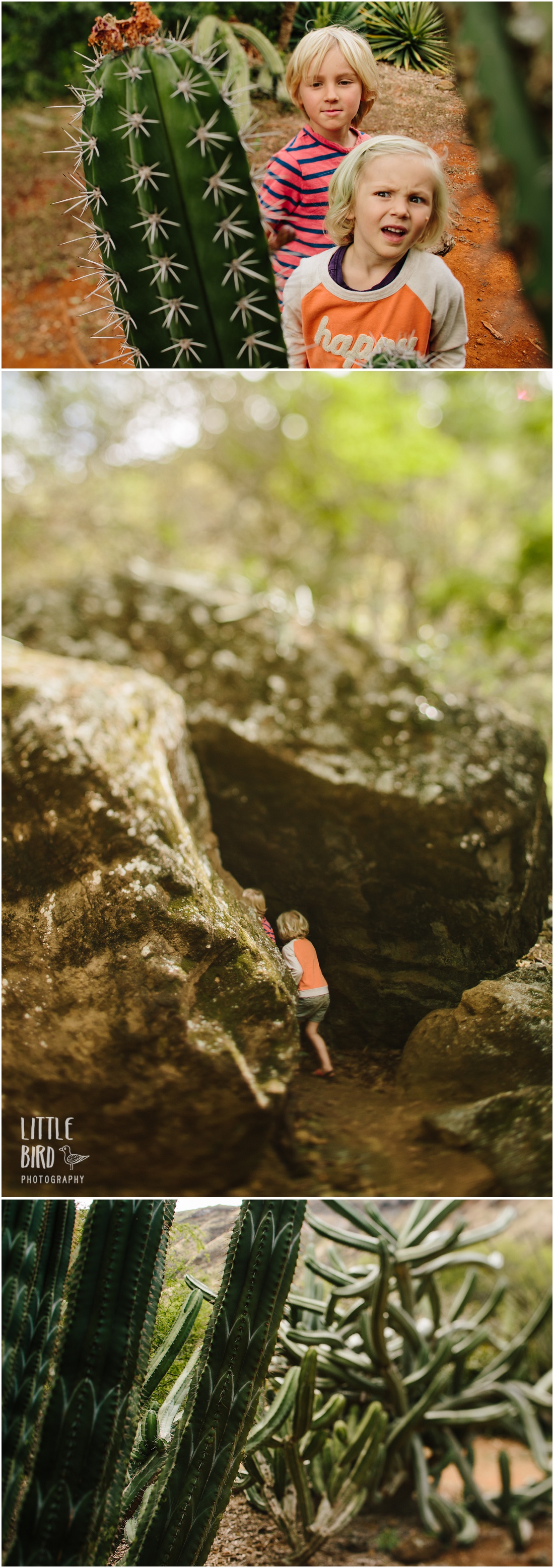
The cactus garden in the middle is the one that gets kids. Towering barrel cacti, sprawling prickly pear, things that look like they belong in the Sonoran Desert. The contrast with everything else on the island is genuinely startling. Keep small kids from touching, obviously, but the looking is excellent.
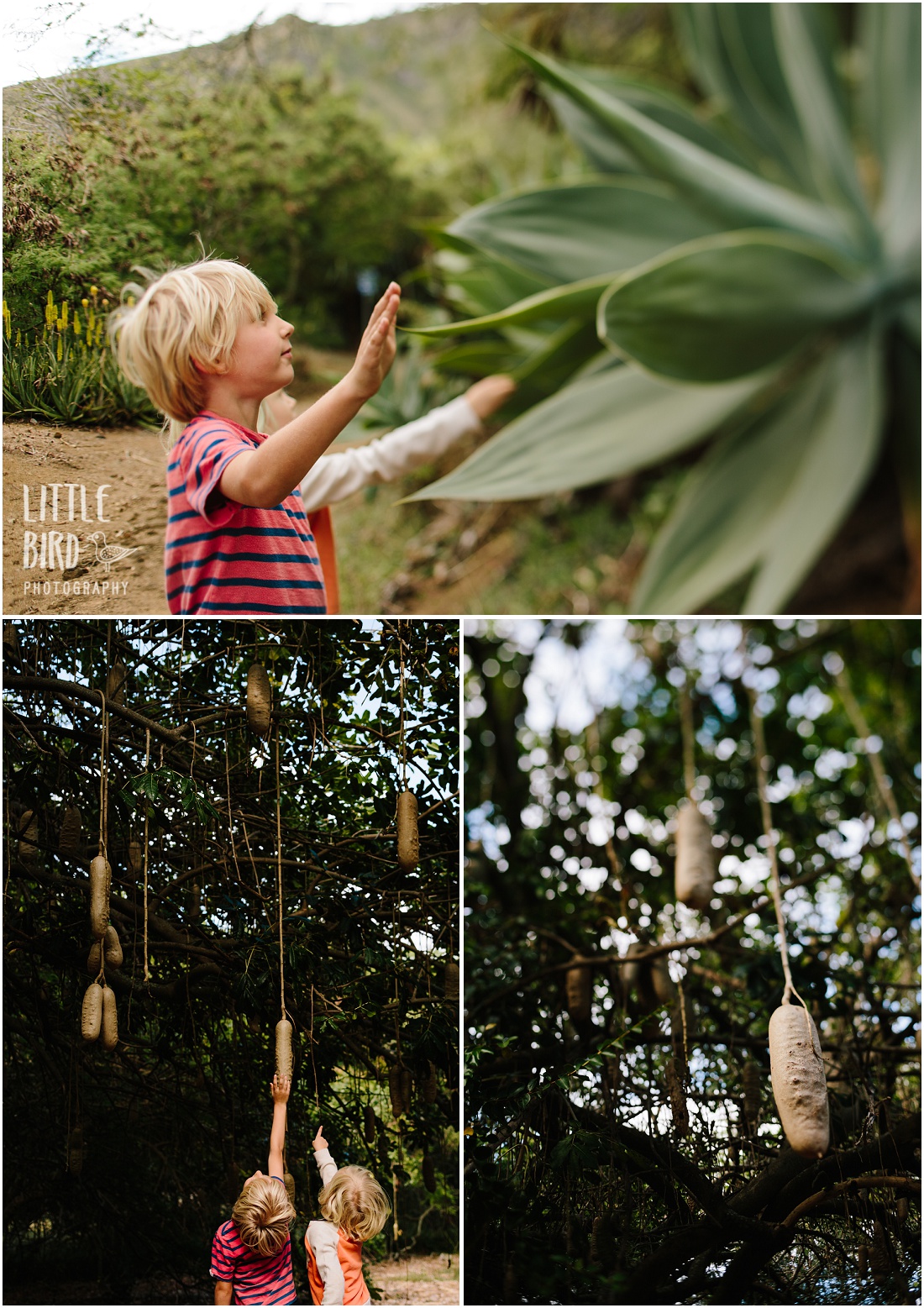
The Madagascar and Africa sections include a sausage tree (the fruit genuinely hangs like sausages from the branches) and baobabs. If your kid has read The Little Prince, this is the moment. The lipstick plant produces seeds that leave a bright red smear when rubbed. There are weird seeds and pods throughout the whole trail and kids find all of them.
The Hawaiian native plant section is at the back of the loop, past the giant rock. Most people turn around before they reach it, which is their loss. Near the back there’s a large boulder with a gap through the middle that functions as a cave. Kids reliably lose their minds over it. You can squeeze through and walk on top.
This is one of the few places on Oahu where kids can run freely without being three feet from a road or someone’s towel. The trail winds through open space, there’s no fence keeping them to a path, and nobody is going to tell them to stop picking up sticks. If you look up while you’re walking, you’ll spot hikers making their way along the crater rim above you. That’s an extension of Koko Head. It’s a different category of adventure entirely.
Getting There and What to Know
Address: 7491 Kokonani St, Honolulu, HI 96825
Hours: Daily, 9am to 4pm. Closed Christmas Day and New Year’s Day.
Cost: Free. Parking is also free.
Parking: A dirt lot near the equestrian center. There’s a gate and a sign that clearly marks the entrance. It’s rarely full.
Dogs: Not allowed.
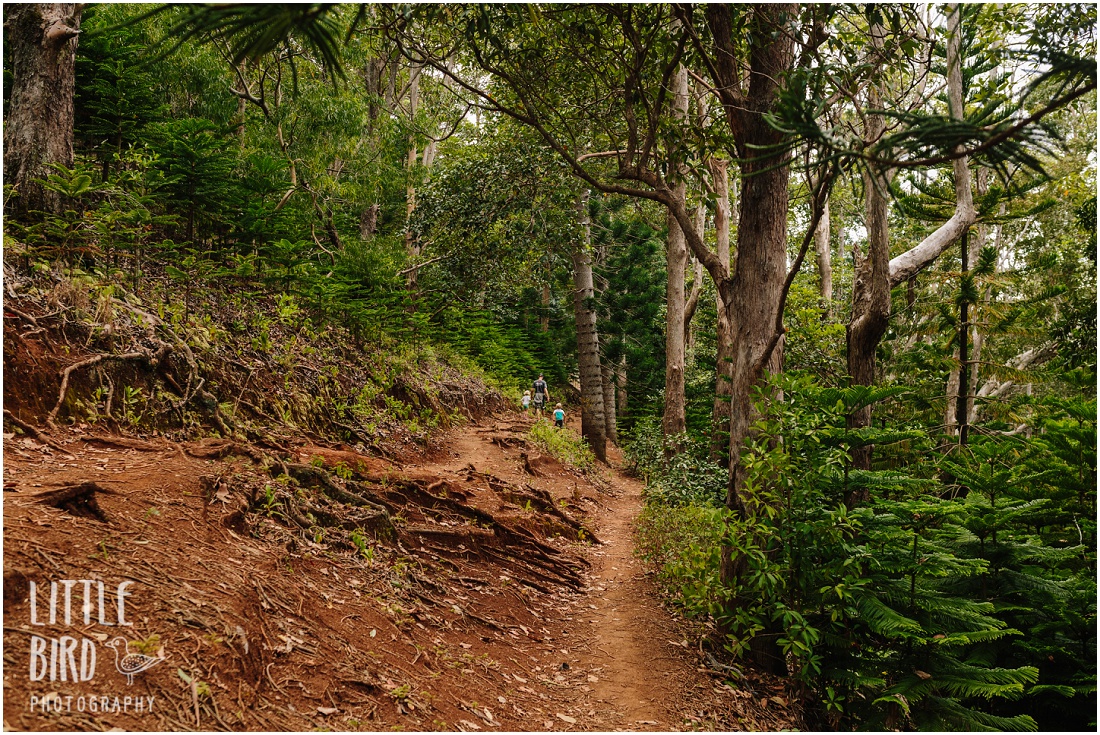
Strollers: Not recommended. The path is an unpaved, rocky dirt road with uneven terrain. A carrier works well for babies and toddlers. A wagon with big wheels can handle it if you’re committed, maybe an off-road stroller, but leave the lightweight stroller at home.
Restrooms: One portable toilet near the entrance and another near the middle.
A security guard is typically stationed at the parking lot, which is worth knowing given that car break-ins are common on Oahu. Leave valuables at home or bring them with you.
What to Bring
Water. This is the non-negotiable. The crater is a bowl, which means it holds heat and blocks wind. Even a mild day in the garden can feel much hotter than the temperature outside. Bring more water than you think you need, especially with young kids.
Shoes. The trail is rocky and uneven in places, with loose gravel and red dirt that will embed itself into everything you’re wearing. Closed-toe shoes for kids are a good call. Don’t wear white. Any white. It will not survive.
Snacks. Not strictly necessary for adults, but if you have young kids, bring something. The garden has a way of pulling you further along the trail than you intended, and a snack break on one of the picnic benches or stone walls scattered throughout is a good reset if someone’s energy starts to flag.
On sunscreen: There isn’t a lot of shade in the garden so a hat and/or sunscreen are good to have.
What to Do Nearby
Halona Cove Beach. Just down the road. Keeps the dramatic, rocky feeling going.
Makapuu Lighthouse Trail. A paved, stroller-friendly trail with big views, tide pools, and a secret beach hike if you have the energy. A natural next stop on the same side of the island.
Ho’omaluhia Botanical Garden. The counterpoint to this one: lush, green, and wide open with the Ko’olau mountains behind it. Worth the drive to the windward side. Here’s the full guide.
Food. The Leonard’s Malasada truck is on the way back toward Waikiki. Get a warm malasada. The dobash filling is a personal favorite.
Family Photos at Koko Crater
Some families aren’t beach families. They’re weird-plant families, poke-everything families, let’s-squeeze-through-that-rock families. If that sounds familiar, the garden photographs beautifully and you can see exactly what a session here looks like here. And if it looks like something your family would be into, here’s where to start.
Koko Crater Botanical Garden FAQs
Q: Is the trail stroller friendly?
A: Not really. The path is an unpaved, rocky dirt road with uneven terrain. A carrier works well for babies and toddlers. A wagon with big wheels or an off-road stroller can handle it, but leave the lightweight stroller at home.
Q: Is Koko Crater Botanical Garden worth it?
A: Yes, especially with kids. It’s free, never crowded, and unlike anywhere else on Oahu. The cactus garden alone is worth the drive.
Q: How hard is the trail?
A: The botanical garden loop is easy. It’s a flat, 2-mile dirt path suitable for kids of all ages. Don’t confuse it with the Koko Head stair climb, which is a completely different trail and a serious workout.
Q: Is there shade on the trail?
A: Some, but not reliably. The crater is a bowl that holds heat and blocks wind. Come early, bring water, and avoid midday in summer.
Q: When is the plumeria grove in bloom?
A: Peak bloom is late spring through summer, roughly May through August. The grove is still worth seeing year-round, but the full color show happens in the warmer months.





Off The Beaten Path
Get my top ten list of spots in Oahu complete with photos + directions, so you know exactly what to expect. You’ll also receive ongoing adventures, beautiful images and happy updates. Escape to the islands once a month and learn exactly how to enjoy Hawaii like someone who raises their family here!
Get on the list