

The Poamoho Trail (also called the Poamoho Ridge Trail) is a 7-mile round-trip hike above Wahiawa that ends at the Koolau summit, and it’s one of the few places on Oahu where you’re surrounded by native forest from the very first step. You’ll need a state permit (weekends and holidays only) and a high-clearance 4WD for the dirt road to the trailhead. It was our family’s favorite hike for years; our oldest did it as a baby, and it topped his list when we asked what he wanted to do before he graduates. We went back this summer, so here’s what the hike is like and a few things we’d do differently next time.
Why the Poamoho Trail Is Worth the Extra Effort
Summer on Oahu means lychees gleam red from roadside stands and flowers are in bloom everywhere. It’s also when the dirt road to the Poamoho trailhead is usually at its driest, so that’s when we head up the mountain.
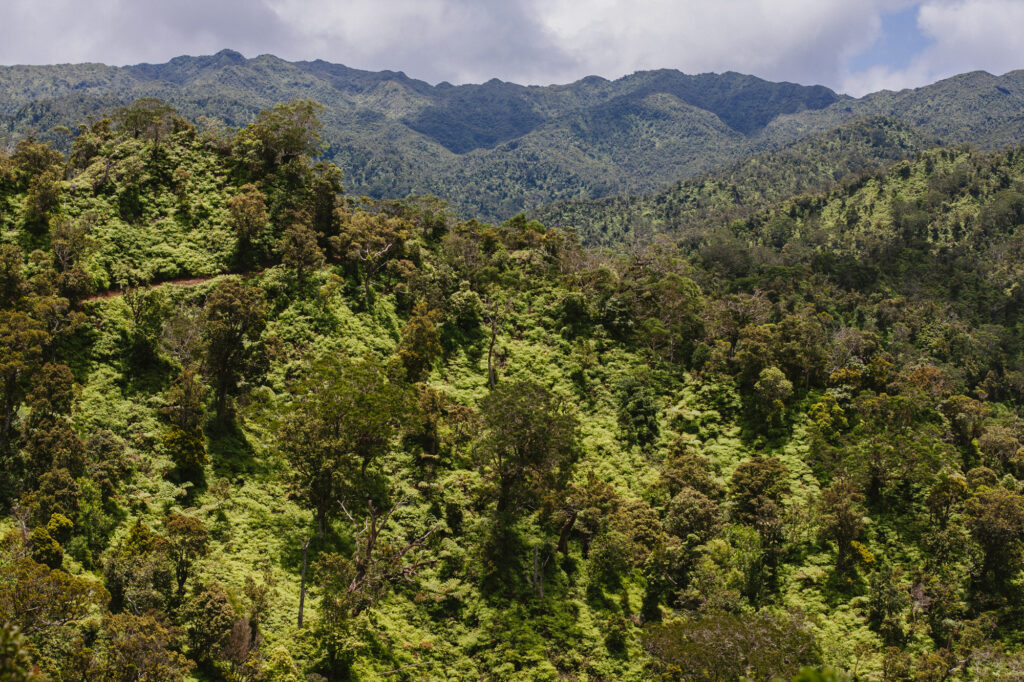
Most summit hikes on Oahu involve a steep, sweaty climb. Poamoho, however, is special. By the time you park, you’re already high in the mountains, so the trail barely climbs at all. It’s about as close as you’ll get to a flat walk to the Koolau summit.
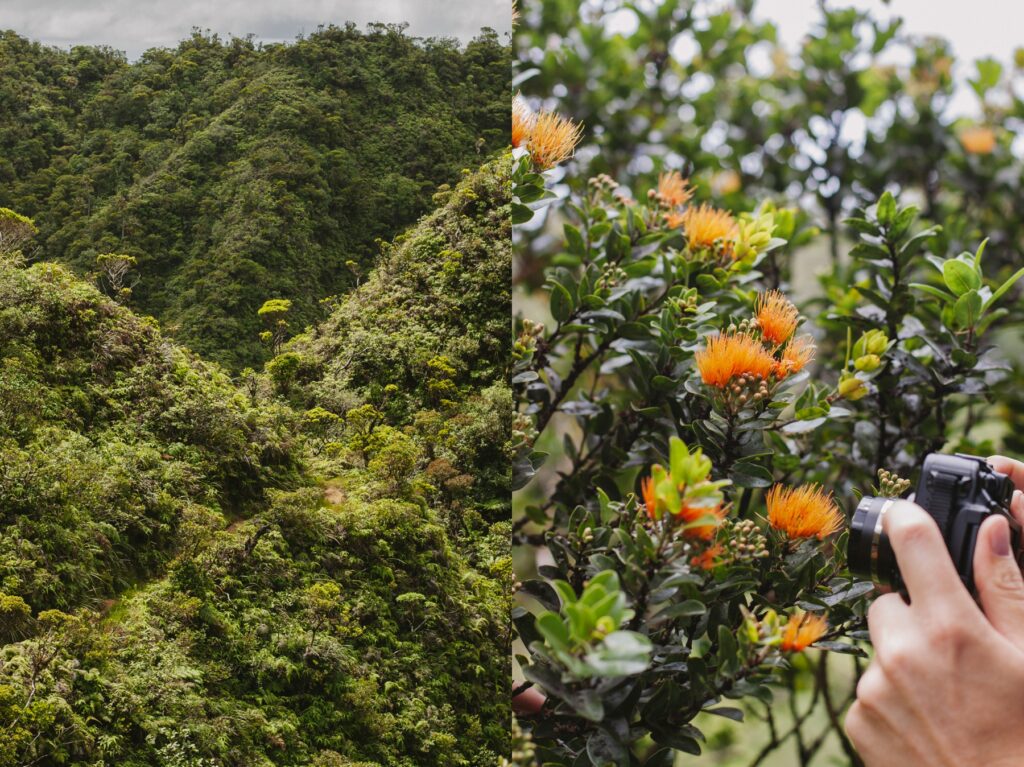
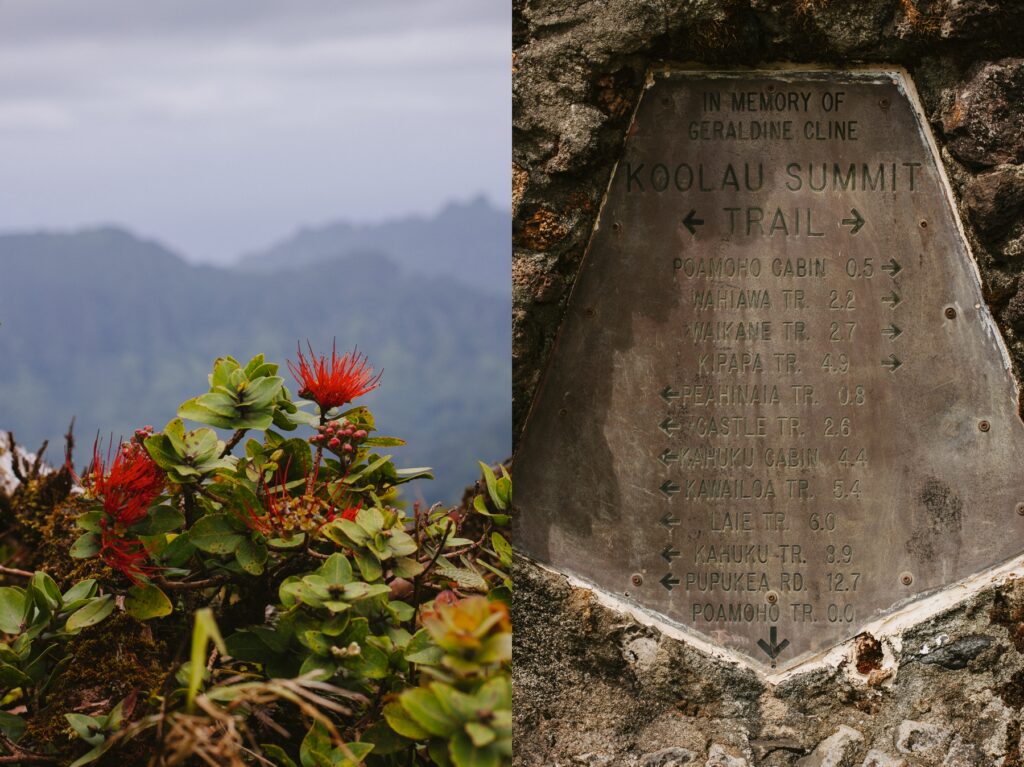
You also skip the endless stands of invasive guava and ironwood common at lower elevations. Real Hawaii starts right at the trailhead; native plants, birds, snails, all the good stuff. Native forest like this is a rarity on Oahu, and you usually have to hike long and steep to reach it. Half a mile in, we heard apapane, and the plants get more diverse and more rare the closer you get to the summit. Pure joy for a couple of former botany majors.
Then there are the views. Every so often the forest opens up and you can see all the way to the North Shore, and at the summit the windward coast spreads out below you. The stretch just before the top is special too. Low clouds often roll in and a chill settles over the ridge, and the whole forest turns quiet and otherworldly. On a hot summer day, it feels like you’ve hiked into a different island.
And because you need a permit, you often have the trail to yourself. Maybe a couple of other hikers, but that’s it. Very cool.
Getting a Poamoho Trail Permit (and Getting Up the Road)
To drive to the trailhead, you need a permit from the state (technically free but there is a small processing fee). It gets you the combinations for the locked gates on the Poamoho Hele Loa access road, a 6-mile dirt road that winds past old pineapple fields up into the mountains. Access is only on Friday – Monday, and state and federal holidays, and online applications must be in at least five working days ahead. Each permit covers one 4WD vehicle and up to five people, and only 20 permits are issued per day, so plan ahead.You can request your Poamoho permit here.
The permit requires 4WD. In a dry summer, you might be able to get away with driving an AWD car which is what we did. This was a wet summer, and AWD was not our smartest choice. The road was longer than we remembered, and it took us about 45 minutes to creep from the paved road to the trailhead, easing around ruts, branches, rocks, and mud puddles. Clearance was our biggest problem, so if you can borrow something higher off the ground, do it. DLNR doesn’t want to come tow you out if you get stuck. Go make a friend with 4WD and get your hike on.
No permit? You can park outside the first gate and walk the road, but that turns a 7-mile hike into roughly 19 miles. Not a kid hike.
Lock every gate behind you. The road crosses private and military land, and public access here was closed for years. Being good guests is how it stays open.
What to Expect on the Poamoho Trail (Wear Long Pants)
When we finally arrived at the trailhead it was hot and exposed, so we got moving. The first stretch is easy going. The trail follows the ridgeline along a clearly marked path with views of the adjacent valley and the mountains ahead. That’s your destination. If you’re lucky, your visit will coincide with the ohia bloom and you can enjoy the red, orange, and cream splashes of color along the way.
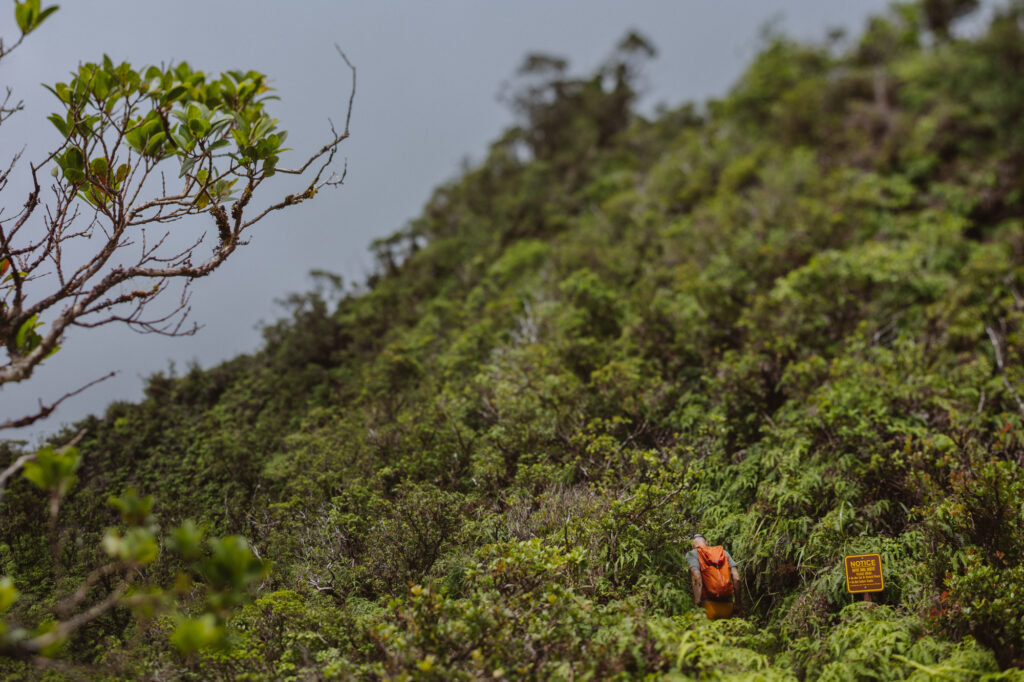
Normally, the trail is maintained up to a fence that sits about a mile before the summit. The fence keeps feral pigs out of roughly 1,000 acres of native forest that’s home to rare plants and endangered kahuli, Oahu’s native tree snails. That same forest soaks up the rain that recharges the Pearl Harbor aquifer, which supplies drinking water across Oahu. On a recent visit, the crew seemed to be part way through the job. The first mile or so had been cleared, and after that the trail was wildly overgrown with uluhe, a native fern with wiry stems that turn sharp when they’re cut. Like amateurs, we’d worn shorts and tees, and our arms and legs were scratched and shredded in no time. We kept thinking it would get better. Just one more turn to see what’s around the corner…It didn’t get better but we got a bit numb and forged on. The best part was coming up.
Past the fence, the forest changes. The clouds settle over you like a wet hug, and mist hangs over the giant tree ferns and scraggly ohia. It’s a rare thing to experience on Oahu, where most hikes are sun and sweat, and on a hot summer day it feels like stepping into a different world. Apapane sing and native plants appear at every corner. Micah checked the undersides of leaves for happy face spiders and native snails, and was delighted when he finally found a tiny, unassuming snail, a nice reminder of what that fence is for.
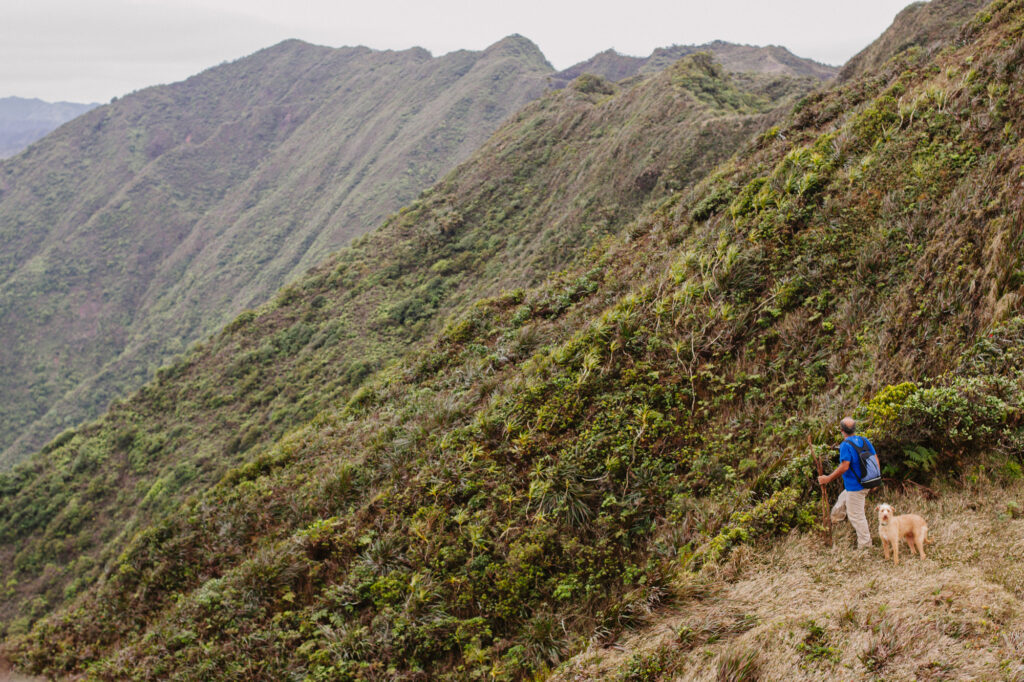
There’s less scratchy uluhe up here, but only because there’s less trail. For a good portion of it, you’ll be navigating a sort of reverse balance beam, walking foot over foot through narrow, well-worn channels in smooth, packed red clay.
We’ve made this trek many times, and only once have we had a completely clear view from the summit. Usually we catch glimpses of the windward coast through the clouds, and sometimes it’s completely socked in. Mornings tend to be clearer than afternoons. Either way, expect to be pummeled by wind and test how far forward you can lean before falling. Even without the view it’s a gorgeous setting.

What to Bring on the Poamoho Trail
The non-negotiables. Long pants and long sleeves, even on a hot day. If the uluhe hasn’t been cut back, it will shred bare arms and legs, and we learned that the hard way. Light, quick drying hiking pants hold up best. Bring plenty of water and snacks too; it’s a long day, and there’s nowhere to refill.
For your feet. Shoes with real grip. The red clay channels near the summit are slick even when it hasn’t rained recently, and the reverse balance beam is no place for worn-out sneakers.
For the weather. A light rain jacket or warm layer. The trailhead can be hot and exposed, but the summit is often cold, wet, and windy, and you’ll want something to put on during your snack break. A hat and sunscreen help for the open stretch at the start.
For the drive. Your printed permit with the gate combinations, plus a towel and a change of clothes waiting in the car. Between the mud and the mist, you’ll be glad you did.
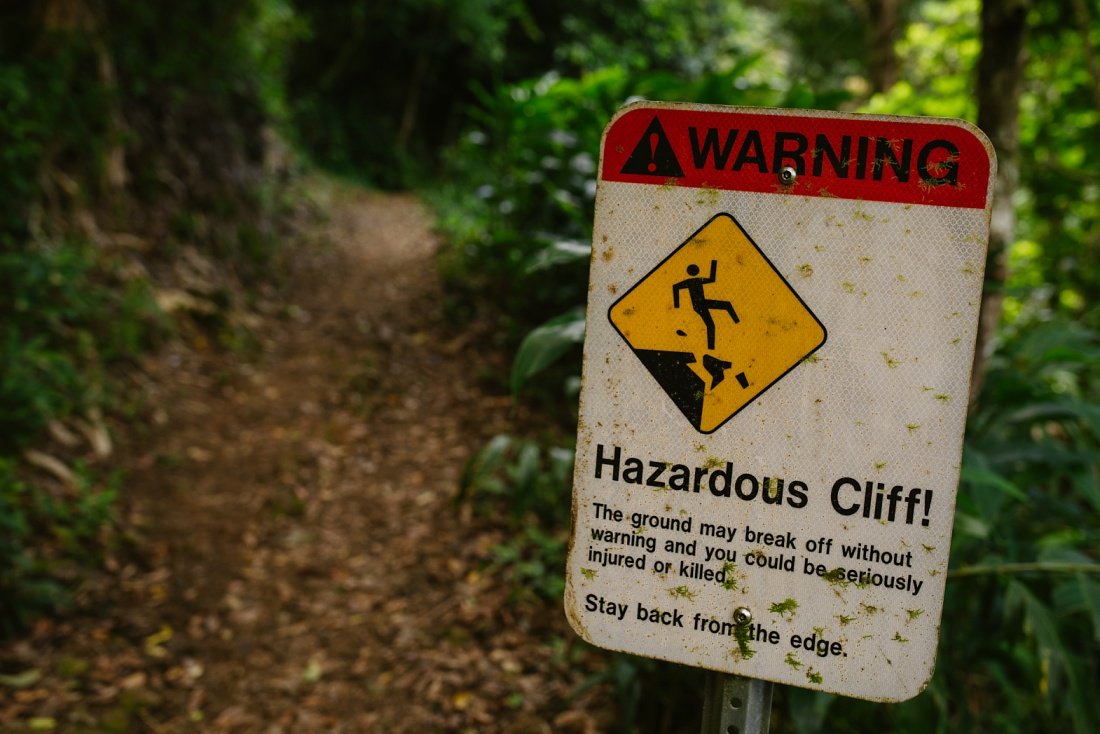
For dogs. A leash, always. There are drop-offs the entire way. Poamoho is also a public hunting area, so you may cross paths with hunting dogs – another good reason to keep them close.
Is the Poamoho Trail Good for Kids?
It depends entirely on the kids, and on when the trail was last cleared.
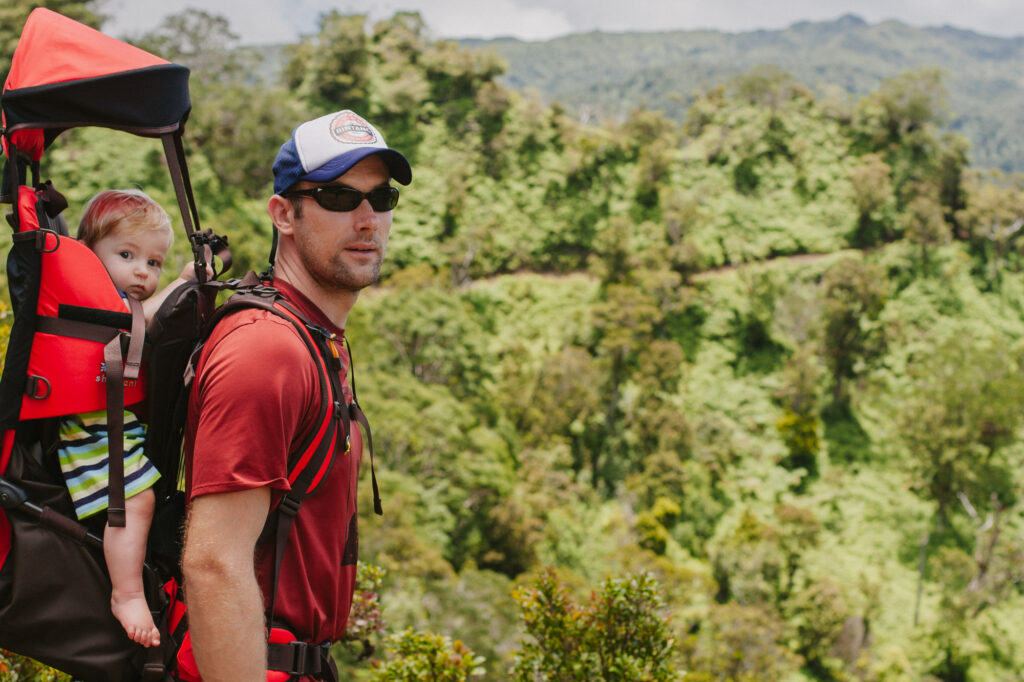
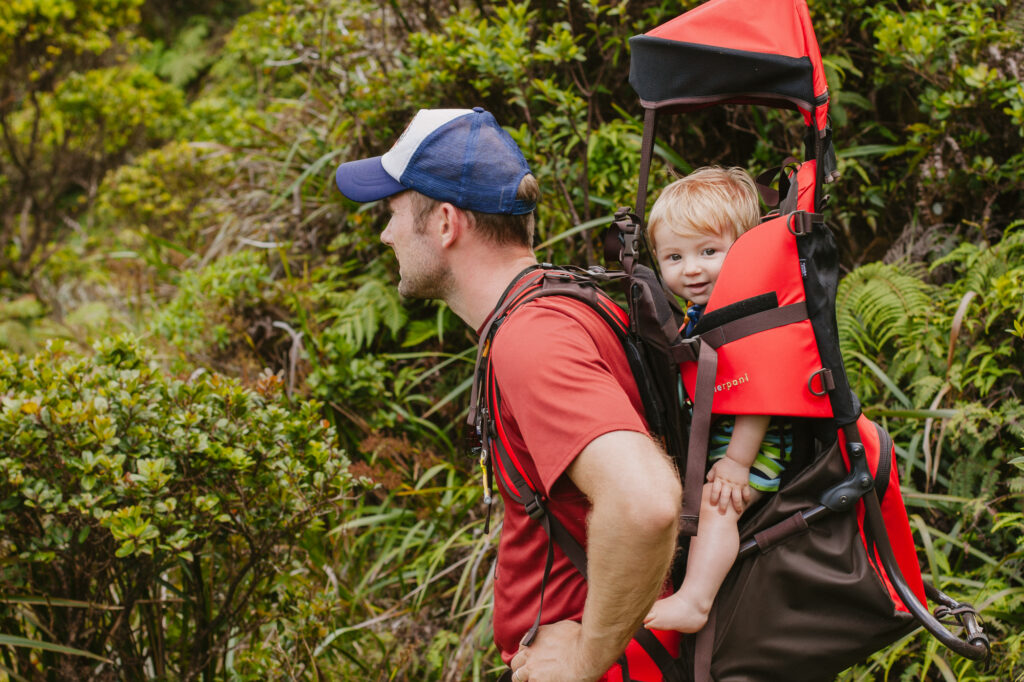
Babies and toddlers in a carrier. When the trail is maintained, Poamoho is one of the easier carries to the Koolau summit. The grade is gentle and there are no low branches to duck under. Our oldest first went up in a carrier as a baby and was super happy. If the uluhe is overgrown, though, you’ll be pushing through ferns with a little one strapped on you which is less fun. There’s no official way to know before you go, but recent AllTrails reviews usually give you a clue.
Kids hiking on their own. Our kids hiked Poamoho at ages 8 to 10 when the trail was maintained, and they loved it, especially the summit, where they’d lean into the wind and see how far they could go without falling. Snacks kept them going the rest of the way. It’s about 7 miles round trip, though, and a good part of it runs along a ridge with a steep drop-off on one side. Expect to get muddy, and if the uluhe is overgrown, you may have to turn back.


Shorter Family Hikes on Oahu
There’s a stretch of years when kids are too big to carry but can’t yet walk far enough for a long hike like this one. If you need something shorter, try an easy loop trail in Nuuanu or a quick waterfall adventure in Kaneohe. For something in between, the Aiea Loop Trail has a WWII bomber wreck hiding at the halfway point, and the Ehukai Pillbox Trail gets you big North Shore ocean views without the long day.
Muddy Shoes Welcome
If your kids think leaning into a summit gale is the best part of a hike, they’re not going to want to stand still and smile for photos. Good news; they don’t have to. A Lanikai session that went from makai to mauka followed one family from the sand toward the mountains, a sunrise session in Laie ended with the kids splashing and swimming on a beach all to themselves, and getting in the water for family photos shows what happens when nobody tries to stay dry. And if it looks like something your family would be into, here’s where to start.

Poamoho Trail FAQs
A: Yes. The state permit is technically free, with a small processing fee, and it gives you the gate combinations for the access road. Access is Friday through Monday plus state and federal holidays, sunrise to sunset. Apply online at least five working days ahead. Each permit covers one 4WD vehicle and up to five people, and you can only get one every 30 days.
A: The permit requires it. The 6-mile dirt road has ruts, rocks, and big mud puddles after rain, and clearance is the biggest challenge. Plan on 30 to 45 minutes each way from the main road, depending on conditions.
A: It’s about 7 miles round trip, with less than 600 feet of elevation gain because you drive most of the way up. The grade is gentle. Mud, uluhe, and the narrow clay channels near the summit are what make it challenging.
A: For kids who already handle long hikes, yes. Ours hiked it at ages 8 to 10 when the trail was maintained and loved leaning into the wind at the summit. A good part of the trail runs along a ridge with a steep drop-off, and if the uluhe is overgrown, you may have to turn back.
A: Summer, when the access road is usually driest. Start early, since mornings tend to be clearer at the summit and clouds often build by afternoon. Even on a good day, bring a layer for the mist and wind at the top.
A: On a clear day, you look down over the windward coast and into Kahana and Punaluu valleys, with peaks like Puu Ohulehule rising out of them. Clear days are rare, though. We’ve made this trek many times and had one completely clear view.

Leave a Reply










Off The Beaten Path
Get my top ten list of spots in Oahu complete with photos + directions, so you know exactly what to expect. You’ll also receive ongoing adventures, beautiful images and happy updates. Escape to the islands once a month and learn exactly how to enjoy Hawaii like someone who raises their family here!
Get on the list